This is an exciting month with so many traditions this article can only scratch the surface. A spring celebration that has been honored for thousands of years dedicated to many vegetation gods. It is a time of renewal, the winter over, and a time for your own resurrection. This is the time to begin anew and take action after your winter slumber of stored energy. Just as the Earth begins wake up and regrow, we must do the same.
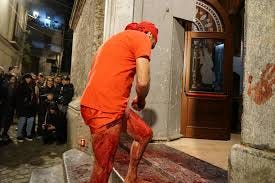
April features one of the greatest spiritual days for Italians worldwide: Pasqua, or Easter. As a Lunar Holiday, the date shifts yearly due to the lunar cycle. The 40 days of Lent precede Easter. For Catholics, it’s a day rich in symbolism, including eggs, rabbits, crucifixes, breads with eggs, red eggs, and palms, among other things. One of the most fascinating rituals, as featured above, is that of the Battenti. While seemingly a gory ritual, it carries immense spiritual weight. These men take on an extremely sacred role of self-sacrifice, self-flagellation, and bleeding for Jesus Christ, the lord of eternal life, resurrection, and light.
This Substack is reader-supported. To receive new posts and support my work, consider becoming a free or paid subscriber.
The Bettenti
The Battenti of Verbicaro, Calabria (in Cosenza where part of my family is from) choose to bleed for Christ because this ritual is deeply rooted in antiquity. Self-flagellation as a form of religious devotion has been practiced across various cultures globally. The men participate in this practice by donning red attire and head coverings, then using a wooden implement studded with nails to strike their legs. This action results in bleeding, accompanied by expressions of intense emotion, stemming from their devotion rather than physical pain. The bloodletting serves as a form of meditation, maintaining an unwavering focus on Christ. This ancient practice is a powerful expression of faith, functioning as both a prayer and a means of uniting oneself with Christ through the sacrifice of pain and blood.
At midnight, the Battenti emerge from the catuv/catuoio (a simple ground-floor or subterranean room used for storage or as a rustic dwelling) and follow a route they repeat three times, stopping at Verbicaro’s main churches and sacred shrines. During these stops, the ritual of beating continues, and the blood from their hands stains architectural features like doorways and stairs. The Battenti typically complete the three laps in about two hours, concluding at the town’s old fountain (the cholera fountain), where they wash their wounds. Afterward, they change into civilian clothes and enter the Church of San Giuseppe, accompanied by the sound of rudimentary instruments played by white-hooded figures. Following prayer, they kneel before the altar, blow kisses toward the Sacrament, and then leave without looking back. The route taken by the Battenti di Verbicaro is the same as the procession of the Mysteries, which begins at the end of their rite, at 3 a.m., and continues until dawn on Good Friday. The rite of the Battenti has been passed down for centuries but has faced challenges over the years, sometimes due to opposition from ecclesiastical authorities.1
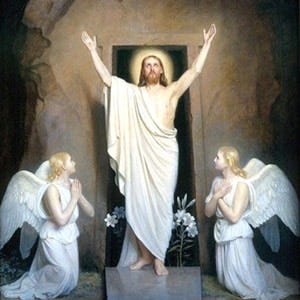
Easter, or Resurrection Sunday, is the central Christian holiday celebrating the resurrection of Jesus Christ from the dead, occurring three days after his crucifixion by the Romans. It marks the triumph of Jesus over death, offering hope, salvation, and new life to believers. Key events include Palm Sunday, Maundy Thursday, and Good Friday.
Following his crucifixion on Good Friday, Jesus was buried in a tomb, which was found empty on Sunday by women followers, including Mary Magdalene, as the Gospels recount. Angels and Disciples announced that Jesus had risen. Mary Magdalene herself is said to have announced this directly to Emperor Tiberius, revealing a white egg that transformed red before him, declaring, “He is risen!”
Easter is the cornerstone of Christian faith, fulfilling prophecies and demonstrating Jesus as the divine Son of God who atoned for humanity’s sins. It signifies victory over sin and death. The story is detailed in the New Testament: Matthew 26–28, Mark 14–16, Luke 22–24, and John 18–20. The name “Easter” is believed to stem from an Anglo-Saxon pagan goddess of spring, Eostre, although there is much debate about this. The celebration is linked to the Jewish Passover, and its date varies between March 22 and April 25 due to it being a Lunar Holiday. Christians celebrate with church services, often starting at sunrise, and it is a time of great joy and renewal.
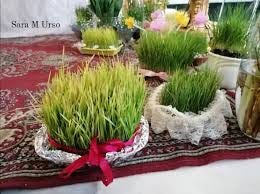
Traditional wheat sprout offerings to Christ as they were for Adonis gardens.
The Pupazze of Bova: Demeter and Persephone
Another tradition in Bova, known as “Mothers and Daughters,” features archaic-looking puppets crafted from palm leaves. The Mother puppet chases the Daughter puppet, reminiscent of Demeter’s search for Persephone.
“There are several opinions about the origins of this rite. For someone this tradition has roots even during the prehistoric times, when the populations evoked Mana (Greek name for the Mother Earth) with propitiatory rites for their crops and for the fertility of the lands.
For someone else it dates back to the myth of Persephone, whose traces are often found in local history and archeology, while other ones say which is an ancient Byzantine tradition of the Lent. Anyway it is an ancestral rite which the faithful renew every year, carrying in procession to the Sanctuary of San Leo (the patron of the village) the “Pupazze”, that is human-sized anthropomorphic statues with the figure of a woman.“ 2
Through Smoke
There is another tradition which I will also like to add the addition of my own family which is adjescent here. The ritual below comes from our friend on the Benedicaria page on Facebook who took the time to transcribe this beautiful tradition citing; “Proverbi, motti e scongiuri”, di Giuseppe Pitrè, “Gli Scongiuri del popolo siciliano”, di Giuseppe Pitre and “Scongiuri del popolo siciliano”, di Giuseppe Bonomo. 3
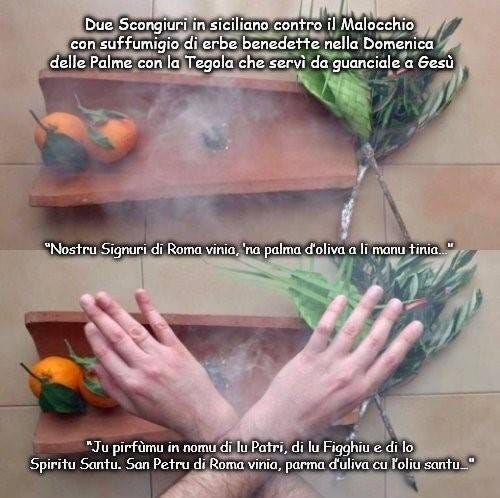
The ritual practice for these two Incantations against the Evil Eye is preceded by an incense—a fumigation rite consisting of placing a small bundle of herbs upon a fired-clay roof tile (known locally as a coppo or canale). This bundle comprises bitter orange leaves, sprigs of rosemary, small pieces of palm frond, and olive leaves that were blessed on Palm Sunday. Lit charcoal embers are placed atop the herbs; as soon as they begin to burn and smoke starts to rise, the Creed is recited. With their hands held in *cruci e nuci*—that is, crossed over the tile—the patient must position themselves over the tile (which is believed to bring calm and repose because it once served as a pillow for Jesus—though a ceramic bowl, or in a pinch, any incense burner will suffice) and recite one of the two Sicilian Incantations against the Evil Eye:
The first Conjuration comes from Casalvecchio Siculo (Messina) and reads:
“Nostru Signuri di Roma vinia,
‘na palma d’oliva a li manu tinia,
supra l’altaru la benedicia,
scippava l’occhi a cu mali facia:
cu tri pani e cu tri pisci
Nostru Signuri m’abbunnisci.”
The second Conjuration comes from Calatabiano (Catania) and reads:
“Ju pirfùmu in nomu di lu Patri,
di lu Figghiu e di lo Spiritu Santu.
San Petru di Roma vinia,
parma d’uliva cu l’oliu santu
a li manu purtava
e lu Signuri
cu Maria Santa lu binidicia:
fora malocchi, fora scappisatura,
liatura, fattura!
Cruci via, cruci via,
leva l’occhiu chi mali facia!
Due lu vastaru,
tri lu difinneru:
lu Patri, lu Figghiu e lu Spiritu Santu;
e cusì sarà
e la Santa Trinità.”
Family Ritual
Now I will turn to a family ritual which is adjacent to this.
On Easter morning, take a rolling pin or another kitchen tool that can be used to beat something. Go around your home beating, like a type of knocking, on all the walls of your home. Ensure you do this on all four corners of your home, inside every room, on every floor. Recite an Our Father repeatedly as you do this. Each knock of the walls is designed to agitate and release restless spirits that may be trapped inside the home from the previous year. It is also designed to release trapped emotions within the home that may have been generated from the previous year.
While I haven’t traced the origin of this ritual beyond its oral transmission from Palermo, Sicily, (via Nonna) my deep passion for uncovering the roots of traditions leads me to suspect a connection to the spiritual concept of the Patruddi di Casa, or lords of the house (a term for the Donne de Fuora) which, in turn, may relate to the ancient Roman Lemuria, a practice for banishing Larvae and Lemures spirits. The use of a rolling pin might also offer a clue. Giuseppe Pitrè, in Volume 3 of Usi e costumi credenze e pregiudizi del popolo siciliano, records folklore about the moon and sun (Luna and Suli), describing their mother, in a sense, as a cosmic baker i.e Baker -rolling pin.
Dance of the Devils
La Morte, dressed in yellow, is a central figure in the dance, often accompanied by Lucifero, Astarotte, Belzebú, and other nameless devils. This grouping is significant due to its direct relation to the Books of Command, particularly the Grand Grimoire and True Grimoire, though I will avoid delving further into this aspect to maintain focus on the article’s main themes.
“The Dance of the Devils,” says Giuseppe Girgenti, president of the Pro Loco of Prizzi, “over the centuries has remained unchanged, fully respecting its main canons. At six o’clock in the morning on Easter Day, the devils “go a pigghiari a paci” in the main churches of the town, a way of apologizing in advance for the future misdeeds they will commit during the day. Devils and Death, in fact, with their terrifying masks will have fun sowing panic among passersby and in the homes of Prizzi residents, leaving the unfortunate in peace only in exchange for a ransom, often something good to eat: eggs with sauce, bread balls, meat sauce, pork sausage even early in the morning. In short, everything is excessive in Prizzi for Easter.”456

 Salvatore Guglielmo